Affiliate disclosure. Some articles on this site contain affiliate links. If you use one and book or buy something, I may receive a small commission; it costs you nothing extra. A commission never buys a recommendation — if something isn’t worth your money, the article says so. Full details in the privacy policy.
What this is
Some travel advice about Tokyo gets repeated until it sounds settled. I took four widely repeated pieces and checked each one against the operator's or the government's own pages.
Three of them turned out to be wrong. The fourth has no official answer at all — and the question itself is one the railway companies are asking people to stop asking.
Here is the short version. Each one is explained below.
| What you have probably read | What the official pages say |
|---|---|
| Tokyo buses are boarded at the front, buses elsewhere at the back | Toei Bus itself runs both systems, inside Tokyo |
| At a Shinkansen gate you always need your ticket and your IC card | It depends on the situation. Sometimes the ticket alone |
| You cannot buy deodorant in Japan | Manufacturers list nationwide drugstores as a sales channel |
| Stand on the left in Tokyo, on the right in Osaka | No operator tells you which side. They ask you not to leave a side open |
1. "Front-door in Tokyo, back-door everywhere else"
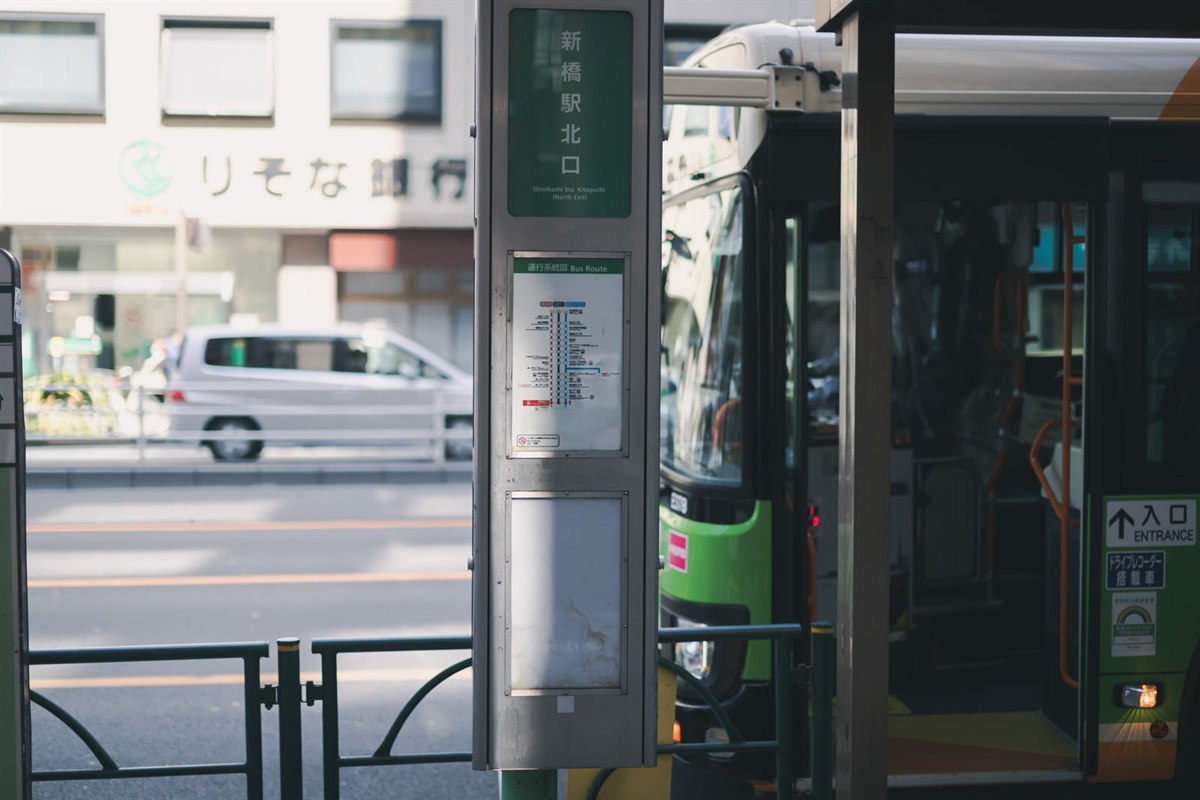
This is one of the most confidently repeated rules about Japanese buses. Here is a version of it, from a traveller writing up their trip:
Buses outside Tokyo work backwards. On at the back, take a numbered ticket, pay at the front when you get off. Tokyo is the other way round.
The Tokyo Metropolitan Bureau of Transportation — the operator of Toei Bus — publishes its boarding instructions in two blocks on the same page.
Inside the 23 wards the heading is 前乗り・前払い, front-boarding and pay-on-boarding:
前扉から乗車になり、所定の運賃を料金機にお入れください。
(Board through the front door and put the fare into the fare machine.)
You leave through the rear door.
In the Tama area the heading on the very same page is 後乗り・後払い, rear-boarding and pay-on-exit:
後扉からご乗車になり整理券をお取りください。
(Board through the rear door and take a numbered ticket.)
You leave through the front door and pay as you get off.
The Tama area is Tokyo. This is one operator, running both systems, within the same metropolis. So the line the advice draws — Tokyo on one side, everywhere else on the other — is not where the difference actually falls.
What decides it, for Toei
Within Toei Bus, the split follows the fare system, and the Bureau states both plainly on its fares page:
東京23区内は均一運賃です。
(Inside the 23 wards, the fare is flat.)
多摩地域は対キロ区間制です。
(In the Tama area, fares are calculated by distance.)
A flat fare is known the moment you board, so it can be collected on the way in. A distance-based fare is not settled until you choose where to get off, so it is collected on the way out.
The correction you will see underneath it is still wrong
When someone posts the front-door rule, a common reply is that the real determinant is the fare: flat fare means you pay as you board, distance-based fare means you pay as you leave.
That is tidier, and as a general rule it does not hold.
Tokyu Bus states its method plainly:
「運賃前払い方式」です。バスの前扉から乗車していただき、運賃をお支払いください。
(It is a pay-in-advance system. Board through the front door and pay the fare.)
And then, on the same page:
反01、青55系統は、ご利用区間により運賃額が異なるため「降車停留所」を乗務員にお知らせください。
(On the Tan-01 and Ao-55 routes the fare differs depending on the section you travel, so tell the driver the stop you are getting off at.)
So on those routes the fare does depend on how far you go — and you still pay on the way in. You tell the driver your destination instead. Distance-based fare does not mean pay-on-exit. It happens to line up that way at Toei. It is not a rule you can carry to the next operator.
If you are using an IC card, the Tama procedure is different again
The "take a numbered ticket" instruction is for paying in cash. With an IC card, the Bureau's guidance is:
乗車時にPASMOを乗車リーダーにタッチしたうえで、降車時にそのPASMOを料金機のICカード読み取り部にタッチしてください。乗車時に整理券を取る必要はありません。
(Tap the card on the boarding reader as you board, then tap the same card on the fare machine's reader as you get off. There is no need to take a numbered ticket.)
Two taps, no ticket. Inside the 23 wards it is one tap, as you board.
This holds for Suica, PASMO and the other nationally interoperable cards. And if your balance runs short mid-journey, you can top up on the bus itself — 1,000-yen notes only, in 1,000-yen units.
Why this matters more than it sounds: both versions of the front-door rule are the kind that make you stop looking. If you believe Tokyo means front-door, you board a Tama-area bus on autopilot and find yourself at the wrong door with people behind you. The useful habit is not a rule to memorise — it is checking the bus you are actually standing in front of.
2. "You always need the ticket and the IC card"
The "always both" version is wrong. What you need at the gate depends on how you arrived at it.
| Your situation | What goes through the gate |
|---|---|
| Entering a Shinkansen gate directly, with a paper ticket | The ticket. That is all |
| You rode ordinary JR lines on an IC card, now transferring | Ticket first, then tap the IC card |
| You rode ordinary JR lines on a paper ticket, now transferring | Both paper tickets, inserted together |
| Getting off the Shinkansen onto ordinary lines | The ticket. Settle the fare at the station where you finish |
| Your reservation is linked to your IC card | Tap the IC card |
Two of those five need both. Three do not.
For the direct case, Smart-EX puts it this way:
新幹線各駅から直接乗車する場合は […]「きっぷ」を投入して乗車してください。
(When boarding directly at a Shinkansen station, insert the ticket to board.)
For the transfer case, JR Central's TOICA page gives the steps in order: insert the Shinkansen ticket into the slot, tap the IC card on the reader, take the ticket back as it comes out.
And going the other way — off the Shinkansen and onto the ordinary lines — the same page describes inserting the ticket and taking it with you, then settling up at the station where you actually get off. No tap at the transfer gate in that direction.
The order is not optional
This is the part worth carrying with you. When a paper ticket and an IC card are both involved, Smart-EX states the sequence:
必ず先に紙のきっぷや磁気定期券を新幹線乗換改札機に投入し、あとから交通系ICカードをタッチしてください。
(Always insert the paper ticket or magnetic pass into the Shinkansen transfer gate first, and tap the IC card afterwards.)
Ticket first. Card second. It is written as a requirement, not a preference.
This is not specific to one company. JR East gives the same instruction, and its page covers the Tohoku, Yamagata, Akita, Hokkaido, Joetsu, Hokuriku and Tokaido Shinkansen:
新幹線のきっぷ(乗車券・特急券)を先に投入してから、Suicaをタッチしてください。
(Insert the Shinkansen ticket — the fare ticket and the express ticket — first, then tap the Suica.)
The same page confirms that PASMO, Kitaca, TOICA, manaca, ICOCA, PiTaPa, SUGOCA, nimoca and Hayakaken all work the same way as Suica.
One trap that is not in the table above
Look at what is printed on your Shinkansen ticket before you touch anything.
If it says 東京都区内 (Tokyo ward area), 東京山手線内, 横浜市内 or 仙台市内, and you are starting from a station inside that zone, JR East's instruction is:
Suicaを利用せずに入場時よりきっぷをご利用ください。
(Do not use Suica. Use the ticket from the moment you enter.)
The local fare inside that zone is already included in what you paid. Tapping in with an IC card at your local station means paying for it twice.
If you are starting from outside the zone, the opposite applies — tap in normally, and at the transfer gate insert the ticket then tap the card. Only the portion outside the zone is deducted from your balance.
Why this is the thing to remember: people describe the Shinkansen gate as the moment the trip stopped making sense — a machine with several slots, a queue behind them, and no clear idea which of the things in their hand goes where. The rule that actually helps is not "you need both." It is: check what zone is printed on your ticket, work out which situation you are in, and if two things are involved, paper goes in before plastic touches anything.
3. "You can't find deodorant in Japan"
This one circulates as a packing warning: bring your own, because you will not find any.
The manufacturers' own release pages say otherwise. Mandom announced two antiperspirant products for release on 23 February 2026 — a roll-on and an unscented spray — and lists the sales channel for both as:
全国のドラッグストア、ホームセンター、スーパー、オンラインショップ、その他
(Drugstores, home centres, supermarkets and online shops nationwide, among others.)
Nationwide drugstores, stated by the company that makes the product. Kao's 8x4 brand site lists its own antiperspirant range as well: powder sprays, roll-ons, body sprays, a neck gel, a paste and a foot spray.
So "you cannot find it" does not hold up.
What I could not confirm
Two things, and they may be the whole substance of the complaint.
The format. The product types I could confirm from official pages are sprays, roll-ons, sheets, a gel and a paste. I could not confirm whether the solid stick antiperspirant common in some countries is sold here. If you are looking for a specific format rather than a specific function, I cannot tell you it will be there.
Where it sits in a given shop. No official source describes that, and this article does not invent it.
Why the distinction is worth drawing: "there is none" and "there is none of the kind I was looking for" produce very different packing decisions. The first says bring a full supply. The second says you will find something that works, but do not assume it will look like what you have at home. Only the second is supported by what I could check.
4. "Left in Tokyo, right in Osaka"
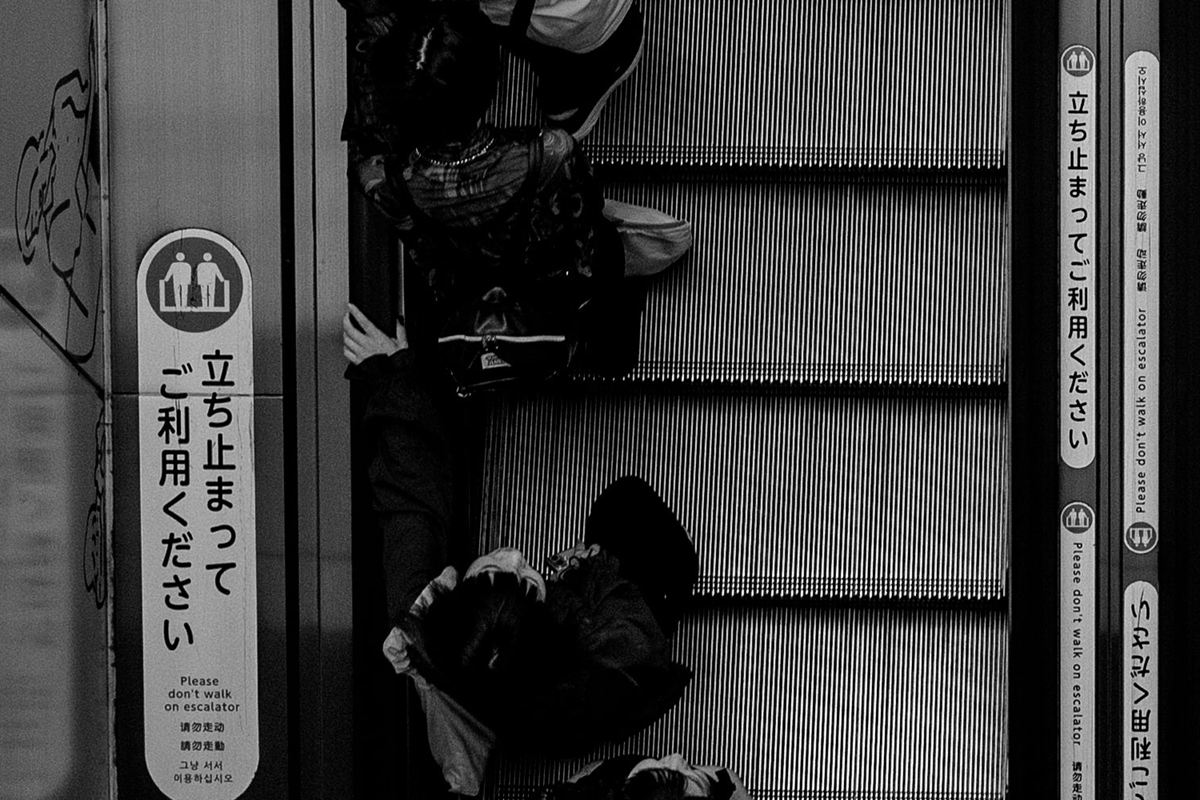
The escalator rule shows up in almost every first-trip write-up. This version is typical:
Escalators are flipped between the two cities and it caught me out. Tokyo you stand on the left, Osaka on the right. You'll get looks standing on the wrong side.
I went looking for the official version of this and could not find one — in either city.
Tokyo Metro does publish escalator guidance. So does Osaka Metro. Neither tells you which side to stand on. What they publish instead is the same campaign, run jointly: エスカレーター「歩かず立ち止まろう」, "stand still, don't walk," which ran from 22 July to 31 August 2025 together with 60 railway operators and 7 organisations nationwide, along with airports, commercial facilities and local governments.
The messages are "don't walk, stand still" and "hold the handrail."
On the habit of keeping one side clear, both companies say the same thing:
エスカレーターで歩行用に片側を空ける習慣は、左右いずれかの手すりにしかつかまることのできないお客さまにとって危険な事故につながる場合もあります。
(The habit of leaving one side open for walking can lead to dangerous accidents for customers who can only hold the handrail on one particular side.)
Note what that sentence is about. Someone who can grip with one hand only does not need a handrail — they need the one on their side. A cleared lane takes that away from whoever's side it happens to be.
Where it has become a rule
Saitama Prefecture — neighbouring Tokyo, not part of it — passed an ordinance that came into force on 1 October 2021. Its requirement:
立ち止まった状態でエスカレーターを利用しなければならない。
(Escalators must be used while standing still.)
There is no penalty attached. The prefecture also describes the situation it is addressing: that most people stand on the left and leave the right clear, and that someone who needs the right-hand handrail is left without one.
That description is Saitama's, about Saitama. I am not going to restate it as a fact about Tokyo, because the Tokyo pages I checked do not say it, and I did not check whether Tokyo has an ordinance of its own.
Why I would drop the question rather than answer it: the left-or-right framing takes the cleared lane as a given and asks only which side it goes on. Sixty-odd operators, two prefectural governments and a nationwide campaign are asking for the lane not to be there. Standing still, on whichever side you are on, is the behaviour every official source I opened actually asks for. Nobody is going to correct you for it.
What survived
- Buses. The rule is contradicted by the operator's own pages — Toei runs both systems inside Tokyo. The usual correction, that distance-based fares mean you pay on exit, holds at Toei but breaks at the next operator along.
- Shinkansen gates. "Always both" is wrong. Which of five situations you are in decides it — and if two things are involved, the ticket goes in first.
- Deodorant. "You can't find it" is wrong. Whether you will find your usual format is a separate question I could not answer.
- Escalators. No official answer to the left-or-right question, because the official position is about not clearing a side at all.
Three of these are pieces of advice that were passed along in good faith and got more confident each time they were repeated. The one that held up best is the one that is not a rule about Tokyo at all.
Facts, dates and sources
Facts on this page were checked against official sources on 25 August 2026.
Practices and rules change. If you are reading this well after that date, check the pages below before relying on it.
Buses
- Tokyo Metropolitan Bureau of Transportation — バスの利用方法
- Tokyo Metropolitan Bureau of Transportation — 普通運賃. Covers the flat fare inside the 23 wards and the distance-based fare in Tama.
- Tokyo Metropolitan Bureau of Transportation — PASMOナビ. Covers IC card use on Toei buses, including the two-tap procedure in Tama.
- Tokyu Bus — 運賃のお支払い方法
Shinkansen gates
- JR East — 新幹線乗換改札機の通り方. Covers the Tohoku, Yamagata, Akita, Hokkaido, Joetsu, Hokuriku and Tokaido Shinkansen, and the zone-ticket warning.
- JR Central, TOICA — 新幹線乗換改札口のご利用方法
- Smart-EX — きっぷでの乗車方法
- Smart-EX — 交通系ICカードでの乗車方法
Antiperspirants
- Mandom — product release, 23 February 2026 (roll-on)
- Mandom — product release, 23 February 2026 (unscented spray)
- Kao — 8x4 brand site, product range
Escalators
- Tokyo Metro — エスカレーター「歩かず立ち止まろう」キャンペーンの実施について
- Osaka Metro — same campaign
- Osaka Prefecture — 誰もが安全安心にエスカレーターを利用できるために
- Saitama Prefecture — エスカレーターの安全利用について
What is deliberately not here. The Shinkansen section covers transferring from ordinary lines onto a Shinkansen. It does not cover the services that let you ride the Shinkansen on an IC card alone, which work differently and which I have not checked. On the bus section, I have not checked operators other than Toei and Tokyu, so I can tell you the "distance means pay-on-exit" rule breaks, but not how often. I would rather leave those gaps visible than fill them.
On the two traveller quotes. Both are from public posts on Reddit. They are individual accounts, not independently verified, and they appear here as examples of how the advice is phrased — not as statements of what is true.
Written in Tokyo. English is not my first language — see the about page. I would rather be plain and correct than smooth and wrong.
More from Tokyo Notes
Practical guides to Tokyo from someone who walks these streets every day – transit, neighborhoods, accessibility, and the small details that make or break a trip. Browse all articles →