Affiliate disclosure. Some articles on this site contain affiliate links. If you use one and book or buy something, I may receive a small commission; it costs you nothing extra. A commission never buys a recommendation — if something isn’t worth your money, the article says so. Full details in the privacy policy.
Which airport you land at decides more than anything else on this page. From Narita you are 60–80 km out and choosing between two limited-express trains and a bus. From Haneda you are inside Tokyo already, and the two rail options both cost under ¥1,000.
What follows is what the operating companies publish on their own pages, checked on 8 September 2026. Where a company does not publish something, I have said so rather than filled the gap.
Before you pick anything: two questions
Where are you actually sleeping tonight? Every route below is fast to some parts of Tokyo and awkward to others. The Skyliner is superb if you want Ueno or Nippori and irrelevant if you want Shinjuku. Keikyu is quickest to Shinagawa. The bus is the only one that stops at hotel doors.
How much are you carrying? Trains here do not charge for luggage, but space is finite and the rules differ. The Skyliner has a dedicated rack in every car. The Narita Express has one too, but JR East says plainly that it is limited and first-come-first-served.
From Narita: the three options
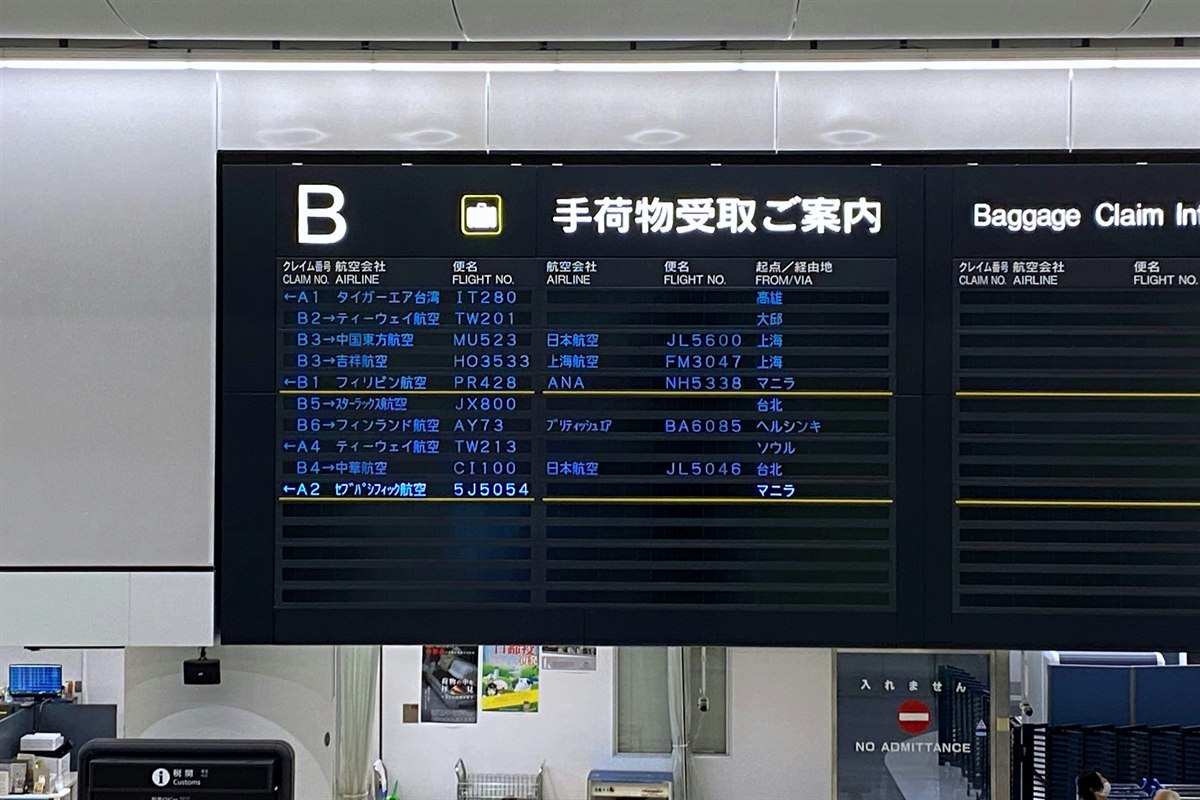
1. Keisei Skyliner — fastest, if Ueno or Nippori suits you
Keisei publishes a fastest time of 36 minutes from Narita Airport Terminal 2·3 station to Nippori, and 41 minutes between Ueno and Terminal 2·3. It runs three services an hour and every seat is reserved, so you are guaranteed one.
The fare is two tickets, not one. Keisei’s own FAQ breaks the ¥2,580 one-way down as a ¥1,280 base fare plus a ¥1,300 reserved limited-express ticket. This matters at Nippori, where Keisei warns that some machines inside the gate sell only the ¥1,300 part — the ¥1,280 base fare is still required. Buying online, through a travel agency or on board a flight brings the one-way to ¥2,310.
Two practical traps at the airport. Skyliner tickets are sold at the Skyliner ticket counter, not the ordinary ticket machines. And Keisei states that major credit cards are accepted only for the Skyliner ticket or the combined ticket — all other tickets must be paid in cash in yen. The company adds that the ticket-counter floor (B1) has few or no currency exchange counters and ATMs, and points passengers to the arrivals floor (1F) instead. If you are landing without yen, get it upstairs.
Each car has a luggage space in the vestibule, 1.52 m wide, with security cameras. Every seat has a power outlet (100V).
Buying the Skyliner ticket before you fly. Klook sells a one-way Skyliner ticket at US$13.95, which it describes as 10% below the on-site price, with free cancellation, instant confirmation and 180 days to use it. Two things to weigh. First, Keisei discounts its own online ticket too — ¥2,310 against ¥2,580 — so this is a choice between two discounts, not between a discount and full price; Klook charges in your own currency and Keisei in yen, so compare on the day. Second, the bundles that add a Tokyo Subway ticket cannot be cancelled at all, unlike the plain one-way. I have not used either. Checked 8 September 2026. Klook’s Skyliner listing (affiliate link).
2. Narita Express (N’EX) — slower, but it goes where you are going
JR East publishes a fastest time of 53 minutes from Narita Airport station to Tokyo station, with no transfer. Its advantage is not speed; it is that one train reaches Tokyo, Shinagawa, Shibuya, Shinjuku, Yokohama and Ofuna.
| From Narita Airport / Airport Terminal 2 stations | Ordinary car | Green car |
|---|---|---|
| Tokyo, Shinagawa, Shibuya | ¥3,140 | ¥3,910 |
| Shinjuku | ¥3,330 | ¥4,100 |
| Yokohama | ¥4,480 | ¥6,750 |
| Ofuna | ¥4,810 | ¥7,080 |
JR East states these are the same all year. Children aged 6 to under 12 pay half on the base fare and the reserved limited-express ticket — but the Green car supplement is the same as an adult’s.
Your IC card can do half the job. JR East shows the ticket as either a paper base fare plus a limited-express ticket, or Suica plus a limited-express ticket. That is a real difference from the Skyliner, where the base fare is a separate purchase.
If the train is full, you can still get on. JR East sells a seat-unspecified limited-express ticket at the same price as a reserved one. It is sold even when every seat is taken; you use any free seat, and stand in the vestibule if there are none. There is no refund for the train being full. You can also buy the limited-express ticket on board.
On luggage, JR East is unusually straight. There are overhead racks plus a large-luggage space, no reservation is needed — but the space is limited and first-come-first-served, some bags will not fit by size or shape, and if none is free you may end up with the bag at your feet. The racks have combination locks and the cars have security cameras.
If you are coming back the same way, the N’EX TOKYO Round Trip Ticket is ¥5,200 and valid 14 days. It is two journeys, not a pass: airport into Tokyo, then Tokyo out to the airport, and the two ends do not have to match. Once you leave a ticket gate it is finished.
3. Airport Limousine Bus — the one that stops at hotels
The bus is the only option here that can put you at a hotel entrance with your bag in the hold and no stairs in between. It is also the one most exposed to traffic, and the operator does not publish a journey time you can rely on the way a railway timetable can be relied on.
A timetable revision takes effect on Thursday 1 October 2026. The operator announced it on 1 September: more services and changed departure times on both the Haneda and Narita lines, the Hotel New Otani route resuming, and revised fares between the Akasaka area and Haneda. If you are reading this after that date, check the timetable again rather than trusting a schedule you saved earlier.
How you pay is worth knowing before you are standing at the stop. Major credit cards work at the ticket counters and machines at Shinjuku Station, Tokyo City Air Terminal, Yokohama City Air Terminal, Narita Airport and Haneda Airport. They do not work at other stops such as hotels, or at the fare box on the bus — the company says to have cash ready. IC cards including Suica and PASMO are accepted on some routes only, not all.
Reservations can be changed up to five minutes before departure, need no account registration, and produce a QR ticket on your phone. Telephone reservations no longer exist.
From Haneda: the two rail options
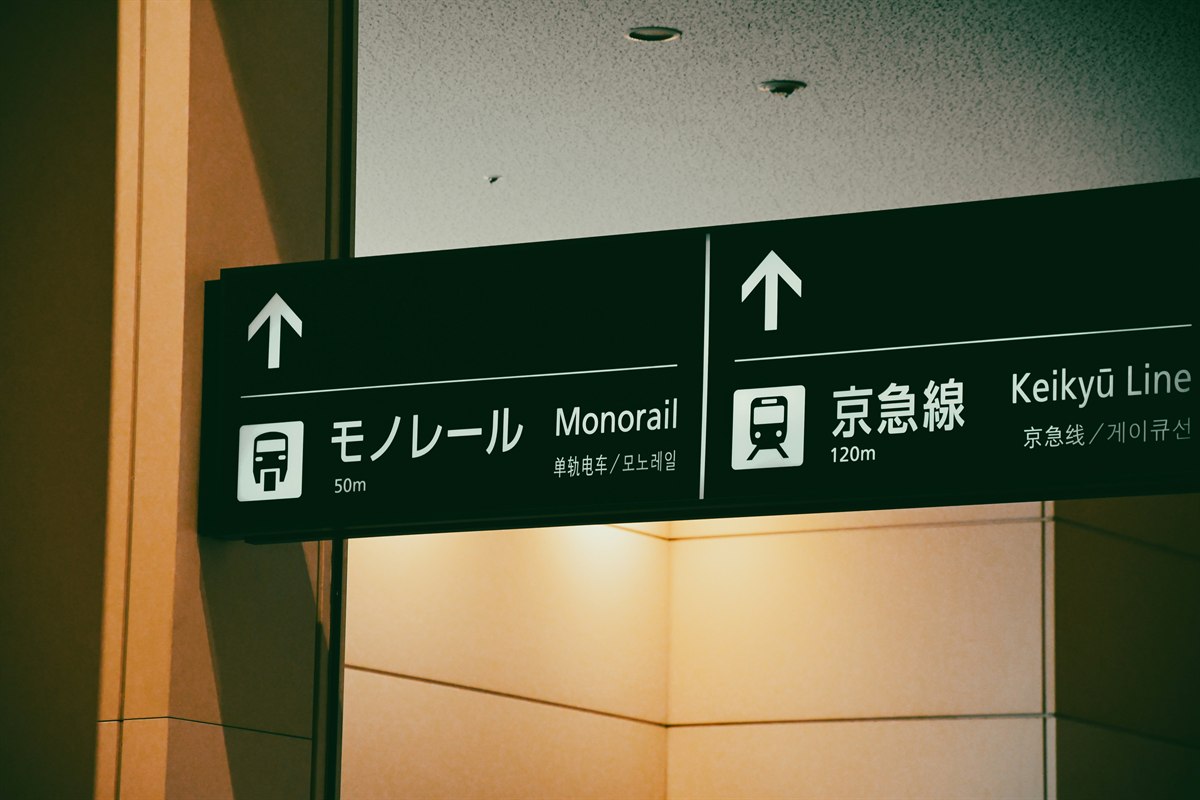
Haneda is the easier airport, and both options are cheap enough that price is unlikely to decide it. What decides it is which side of Tokyo you are heading for.
4. Keikyu — quickest to Shinagawa, and it runs into the subway
Keikyu publishes these times from the airport stations:
| Destination | From Terminal 3 | From Terminal 1·2 |
|---|---|---|
| Shinagawa | 11 minutes | 14 minutes |
| Tokyo | 20 minutes | 23 minutes |
| Shimbashi | 21 minutes | 24 minutes |
| Shibuya | 23 minutes | 26 minutes |
| Yokohama | 23 minutes | 28 minutes |
| Shinjuku | 30 minutes | 33 minutes |
| Asakusa | 34 minutes | 37 minutes |
| Ikebukuro | 38 minutes | 41 minutes |
| Narita Airport | 92 minutes | 95 minutes |
Keikyu trains run through onto the Toei Asakusa Line, which is why Shimbashi and Asakusa appear without a transfer.
There is one instruction on Keikyu’s English page that is easy to miss. To buy a paper ticket into central Tokyo you have to press either the 都営線 (Toei Line) or JR線品川乗換 (transfer to JR at Shinagawa) button on the machine. Those buttons are named in Japanese on an otherwise multilingual machine. Tapping in with an IC card avoids the question entirely, and Keikyu adds a small reason to prefer it: fares are calculated to the yen when an IC card is used to both enter and exit, and rounded to 10 yen otherwise.
The machines take cash or a credit card and have a language button. Round-trip, special and discount tickets cannot be bought with a card.
5. Tokyo Monorail — for the Yamanote Line side of town
The Monorail runs from all three Haneda terminals to Hamamatsucho, where you change to the JR Yamanote Line. Tokyo Monorail publishes the combined fare to Yamanote stations:
| To (via Hamamatsucho) | Ordinary paper ticket |
|---|---|
| Yurakucho, Shimbashi, Tamachi, Takanawa Gateway | ¥680 |
| Tokyo, Kanda, Akihabara, Shinagawa, Osaki | ¥720 |
| Ueno, Nippori, Ebisu, Meguro, Gotanda, Yotsuya | ¥730 |
| Shinjuku, Shibuya, Harajuku, Shin-Okubo | ¥780 |
| Ikebukuro, Mejiro, Takadanobaba | ¥870 |
There is a ¥590 flat ticket to any Yamanote station, but only on certain days. The Monorail & Yamanote Line Discount Ticket is ¥590 for adults and ¥290 for children, one-way and one use, bought from the ticket machines at the Haneda stations. It is sold on Saturdays, Sundays, public holidays and a published list of holiday periods between 14 March 2026 and 31 March 2027 — among them 1–7 October 2026 and 26 December to 3 January. It is valid only on the day you buy it. On an ordinary weekday it is not on sale, so do not plan around it without checking the date.
Suica works on the Monorail. If you are buying the card itself, note the ¥500 deposit, which comes back when you return the card.
So which one
There is no ranking here, because the honest answer depends on things I do not know about your trip.
- Narita, going to Ueno or Nippori, travelling light: the Skyliner is the fastest published option and the only one where a seat is guaranteed.
- Narita, going to Shinjuku, Shibuya or Yokohama: the Narita Express goes there directly; the Skyliner does not.
- Narita, heavy bags or a hotel far from a station: the bus is the only one that avoids stairs and transfers, at the cost of traffic.
- Haneda, anywhere near Shinagawa or the Asakusa Line: Keikyu.
- Haneda, anywhere on the Yamanote Line: the Monorail, and check whether the ¥590 ticket is on sale that day.
There is a cheaper way out of Narita than any of the three above. Keisei runs trains from the same airport stations that need no limited-express ticket — about half the Skyliner fare, for roughly ten to thirty minutes more. They are covered separately in the Narita trains that cost half the Skyliner.
Late arrivals and early departures
This is where I have the least to tell you, and I would rather say so.
What I can confirm is when the JR ticket counters at Narita are open, because JR East publishes it. At Narita Terminal 1, the JR-EAST Travel Service Center is open 08:30–19:00, while the passport-reading ticket machines and the JR ticket office run 06:30–21:45. At Terminal 2·3 the Travel Service Center runs 08:30–20:00 and the machines and ticket office 06:30–21:45. If your flight lands late and you were planning to collect a pre-bought N’EX ticket, those hours are the constraint.
What I cannot confirm is the first and last service on any of these five routes. None of the operator pages I opened published first and last departure times in a form I could read directly, and I am not going to reproduce numbers from a reseller or a guide as though an operator had said them. Check the operator’s own timetable for your date before you rely on a late train.
What I could not confirm
Everything above comes from an operating company’s own page. These did not, so they are not in the article:
- Limousine bus fares. The fare tables load through a search form I could not read reliably, so no bus fare appears above.
- Keikyu’s exact fares. Keikyu publishes them as a PDF I did not open. The journey times above are from the web page.
- The Monorail-only fare to Hamamatsucho on its own, as opposed to the combined Monorail-and-Yamanote fares shown above.
- First and last services on all five routes, and how often the Narita Express, the buses, Keikyu and the Monorail run. Only Keisei’s “three services an hour” is from an operator.
- How the Narita Express fare splits between base fare and limited-express ticket. JR East publishes the combined figure only.
- How much the Skyliner fare changes with an IC card. Keisei says it “differs” without saying by how much.
- The limousine bus baggage allowance. There is a notice about checked baggage dated 1 April 2026 that I did not open.
Facts, dates and sources
Facts on this page were checked on 8 September 2026 against the operating companies’ own websites: Keisei Electric Railway (Skyliner overview, FAQ and discount-ticket pages), JR East (Narita Express pages, marked as updated 14 March 2026), Airport Transport Service (Limousine Bus notices and FAQ), Keikyu (Haneda Airport access guide) and Tokyo Monorail.
The Klook prices and conditions in the box above come from Klook’s own product page, checked the same day. Klook is the seller there, so its page is the source for what it sells — but not for anything about how Keisei runs its trains.
Three limits worth stating. Fares and timetables change, and one change is already announced: the bus timetable revision of 1 October 2026. I have not travelled these five routes with a stopwatch; every journey time here is the operator’s published figure, not mine. And the list above of what I could not confirm is not padding — those gaps are real, and filling them from memory is exactly how travel pages go wrong.
Written in Tokyo. English is not my first language — see the about page. I would rather be plain and correct than smooth and wrong.
More from Tokyo Notes
Practical guides to Tokyo from someone who walks these streets every day – transit, neighborhoods, accessibility, and the small details that make or break a trip. Browse all articles →