Affiliate disclosure. Some articles on this site contain affiliate links. If you use one and book or buy something, I may receive a small commission; it costs you nothing extra. A commission never buys a recommendation — if something isn’t worth your money, the article says so. Full details in the privacy policy.
Which system applies to you
- Bought, or buying, up to 31 October 2026. The earlier system. The tax came off at the till; general goods and consumables were counted as two separate pools; consumables had an upper limit as well as a minimum; and consumables went into a sealed bag you were not to open. Missing the airport step usually cost nothing.
- Buying on or after 1 November 2026. The system this article describes. You pay the tax-included price, and the money comes back after a customs step at the airport.
Does this affect you?
It affects you if you shop tax-free in Japan on or after 1 November 2026.
If your trip ends before that date, nothing here applies to you. Purchases made up to 31 October 2026 follow the earlier system, in which the tax was taken off at the till.
If you are shopping on or after that date, these are the things that change how your day actually goes:
- You pay the full, tax-included price at the register.
- You have to finish a customs step at the airport before you check your bags.
- If you connect from a domestic flight, that step happens at the airport you leave Japan from — not where you started.
- Whether the money comes back in a week or at the counter that same afternoon depends on the shop you bought from.
Each of those is below.
A note on sourcing: the rules here come from the official sources listed at the end. I also quote two travellers describing the airport as it worked before 1 November 2026 — those are personal accounts, not verified facts, and they are marked where they appear.
At the register: the price does not drop any more
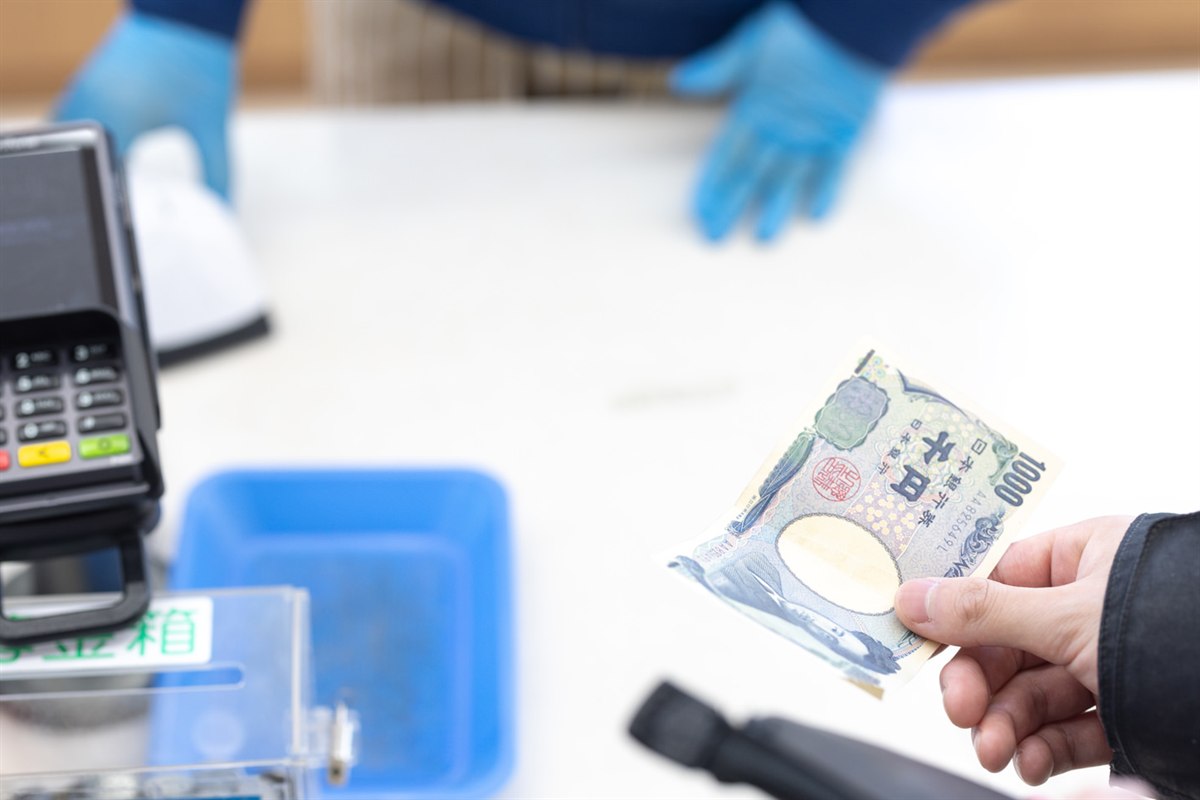
From 1 November 2026, a tax-free shop sells you the goods at the tax-included price. You pay the consumption tax like anyone else.
Nothing is deducted at the moment you buy. The discount you may be expecting from older guides, blog posts, or a previous trip does not happen at the till.
This is the part that catches people out, because it inverts the habit. If you have shopped tax-free in Japan before, the saving arrived at the till. From this date, it does not.
Why it works this way: the money now comes back after customs has confirmed, at your departure, that the goods are leaving Japan. The refund is tied to that check, so it cannot happen at the register.
So budget for the full price. If you are planning your spending down to the yen, plan it with the tax included.
What has not changed: the ¥5,000 minimum
Paying the tax at the till does not mean the qualifying conditions went away with the discount. They did not.
To be eligible at all, you still need to buy ¥5,000 or more, before tax, at the same shop on the same day. That threshold is unchanged from 1 November 2026.
One part of how it is worked out does change, and in your favour. Under the system in place up to 31 October 2026, the total was calculated with general goods and consumables counted as two separate pools. For purchases made on or after 1 November 2026, that split no longer applies to this calculation: everything eligible you buy in that shop that day is added together, and the ¥5,000 is judged on the combined total. As before, it is judged on the before-tax amount.
Why this is worth pinning down: if you read only that you now pay tax at the register, it is easy to assume the old conditions were swept away along with the discount. The minimum is not one of them. A ¥3,000 purchase does not qualify, on either side of the date.
At the airport: do the customs step before you check your bags
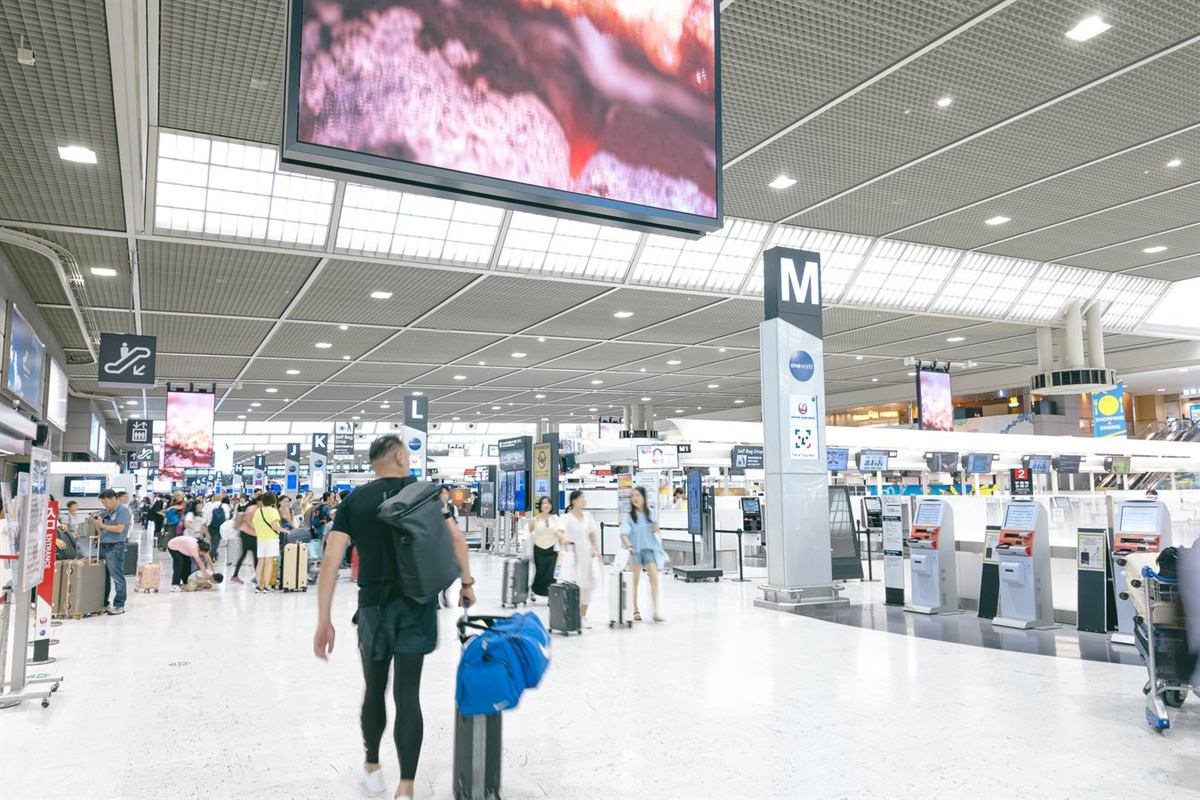
At the airport you leave from, you go to a tax-free procedure terminal in the departure lobby and receive customs confirmation there.
This has to happen before you hand your bags to the airline.
Once a bag is checked, you cannot get it back. There is no retrieving it to show an item to customs. If the goods are inside a bag that has already gone, the step cannot be completed.
The Japan Tourism Agency's FAQ answers this exact situation — someone who has already given the airline a suitcase with their tax-free purchases inside:
一度預けた受託手荷物を引き戻すことはできません。
(Baggage you have already checked cannot be retrieved.)
There is no recovery step. The same order-of-operations mistake turns up in airport-refund systems elsewhere: in one traveller's account, a jacket went into a checked bag before the refund desk, and the refund was lost when the desk asked to see it.
Why this matters more than it sounds: the natural order at an airport is to check in, drop your bags, and then relax before security. That order does not work here. The customs step comes first, and the goods have to still be with you when it does.
The bigger risk is not finding the terminal at all
Under the system in place up to 31 October 2026, the airport check is a minor step, and travellers describe it as easy to miss: a small unstaffed machine on a table, no one directing anyone to it, and no consequence for walking past.
Two accounts from Japanese airports, both from travellers who tried and failed to complete it:
I walked through the whole departures area and couldn't find it.
Since there was a very big queue and we didn't want to miss our flight, we thought we can do it manually after the security check […] also instructions on the machine were unclear.
The first was looking for the customs desk at Haneda. The second gave up on a queue at Narita and assumed there would be another chance further along. There was not.
Under the system in place up to 31 October 2026, missing the terminal usually costs nothing, because the discount was already taken at the shop. For purchases made on or after 1 November 2026, the confirmation is what triggers the refund. Walking past it is no longer free, and a queue you decide to skip is money you decide to leave behind.
Give yourself time for this. It is an extra stop you did not have on your last trip, and it sits at the busiest point of your departure.
Connecting from a domestic flight? Do it at your final airport
If you fly a domestic leg first and then connect to an international flight, you complete the procedure at the airport you leave Japan from — the last airport before you exit the country. Not the regional airport you started at.
The Japan Tourism Agency's English leaflet puts it this way:
If you are transferring from a domestic flight to an international flight before departing Japan, you must complete all refund procedures at the outbound airport.
One thing the official material does not settle: what happens to a bag you check at the regional airport that is through-checked to your international flight. The rules say the goods must be with you at the terminal, and that checked baggage cannot be retrieved. They do not say how those two apply to a bag checked on a domestic leg. If this is your itinerary, the safe reading is to keep the goods with you.
One missing item can take down the whole receipt
Customs confirmation is judged per purchase record — that is, one sale, one receipt.
If you are not carrying even one of the items listed on that receipt when you go through the customs step, you cannot receive confirmation for any of the items on it. Not just the missing one. All of them.
Why this deserves attention: it makes a small, ordinary decision expensive. Leaving one item behind in a hotel room, giving one away, or packing one into a bag you have already checked can take the whole receipt with it.
Travellers keep asking a version of this question — whether using one item costs you the tax on that item alone or on everything bought with it — and getting no clear answer. For purchases made on or after 1 November 2026, for the purposes of the refund, the unit is the receipt.
If a receipt covers several items, the receipt travels as a set. Keep it that way until customs has seen it.
Doing it on your phone instead: Visit Japan Web
At some airports you can complete the customs confirmation online through Visit Japan Web, using your own phone, instead of queuing at a terminal.
It is available at seven airports:
- Narita
- Haneda
- Kansai
- Chubu
- New Chitose
- Fukuoka
- Naha
You do it inside the international departure lobby, in the area covered by the dedicated wireless network for the procedure, and — this is the part not to miss — only up to the point before the security checkpoint. The same boundary as the physical terminals. Going through security does not become a shortcut.
You need to be registered on Visit Japan Web before you take the customs confirmation.
Why this is worth setting up in advance: it is the one part of this you can prepare from your hotel the night before, rather than in a queue with a flight to catch.
How and when the money comes back: it depends on the shop
The law does not set rules for how the refund is carried out.
What that means in practice:
- The refund may come from the shop itself, or from a business the shop has contracted to handle refunds.
- The method varies. Bank transfer, credit card, an app, and cash inside the departure area after customs confirmation are all possible ways it can be done.
- The timing varies too. Refunding after customs confirmation is the basic order, but a shop is not forbidden from refunding you earlier. Some shops may hand the money back on the spot, at their own risk.
So two people buying the same thing on the same day in two different shops can genuinely have two different experiences.
Shop-to-shop variation is not new — travellers reported meeting several different tax-free procedures in different shops under the earlier system as well. What changes on 1 November 2026 is that the variation now covers your money coming back, rather than a counter you queue at.
One consequence worth planning around: advice written before 1 November 2026, including advice you may be given in a shop, describes the earlier system. Check the date on anything you rely on.
What to do with that: ask at the register how that particular shop handles it. That is the moment to find out — not at the airport, and not after you have flown home.
No official source gives a figure for how long a refund takes, so there is no figure in this article. I would rather leave a gap than fill it with a number nobody stands behind.
The 90-day limit, and how the days are counted
You have to leave Japan within 90 days of the purchase.
The counting is specific: it runs from the day after the purchase date, through to the 90th day. The day you buy is not day one.
If you leave later than that, the customs confirmation cannot be done, and the refund does not happen.
Why to check this at all: for a normal two-week holiday it is not a concern. It becomes one if you are on a long stay, if you buy something early in a multi-month trip, or if you are shopping on a trip and flying out on a later one.
Quick version
- At the shop — You pay the tax-included price. Nothing is deducted.
- Minimum — ¥5,000 or more, before tax, same shop and same day. Unchanged. Judged on the combined total.
- At the airport — Customs confirmation at a departure-lobby terminal, before you check your bags.
- Connecting flight — Do it at the airport you leave Japan from, not where you started.
- On your phone — Visit Japan Web works at 7 airports, before the security checkpoint. Register in advance.
- Per receipt — One item missing means no confirmation for anything on that receipt.
- Refund — Method and timing depend on the shop. Ask when you buy.
- Deadline — Depart within 90 days — counted from the day after purchase to the 90th day.
Facts, dates and sources
Facts on this page were checked against official sources on 23 August 2026, and re-checked on 12 September 2026.
Rules change. If you are reading this well after that date, check the official pages below before you rely on it.
Official sources used:
- National Tax Agency — 輸出物品販売場制度のリファンド方式への見直し
- National Tax Agency — Tax-Free Shopping System will be shifted to the Refund Method from November 2026 (English, April 2025)
- National Tax Agency — Notice to Foreign Travelers Who Purchase Tax-Free Goods (multilingual: English, Chinese, Korean, Japanese)
- National Tax Agency — 輸出物品販売場制度に関するQ&A(リファンド方式)(July 2026). Q32 covers the customs check and the connecting-flight rule; Q33 covers the Visit Japan Web option and the list of seven airports; Q36 covers how the days are counted; Q37 covers the receipt as the unit for customs confirmation.
- National Tax Agency — 輸出物品販売場制度に関するQ&A(リファンド方式・概要編)(revised April 2026). Covers the ¥5,000 minimum and how it is judged once the goods categories are merged.
- Japan Tourism Agency — 【旅行者向け】新制度(リファンド方式)特設ページ
- Japan Tourism Agency — 旅行者向け よくある質問(リファンド方式)
- Japan Tourism Agency — 手続の変更点(比較表)
- Japan Tourism Agency — refund-method leaflet for travellers (English)
The multilingual notice from the National Tax Agency is worth opening on your phone before you fly. It is the same information, from the source, in a form you can show to someone.
On the two traveller quotes. Both are from public posts on Reddit written in 2025 and 2026. They are individual accounts of the system as it worked before 1 November 2026 and have not been independently verified. They are here because they show which mistake people actually make — not as statements of what the rules are.
Written in Tokyo. English is not my first language — see the about page. I would rather be plain and correct than smooth and wrong.
More from Tokyo Notes
Practical guides to Tokyo from someone who walks these streets every day – transit, neighborhoods, accessibility, and the small details that make or break a trip. Browse all articles →